
Why English Is a Terrible Language
English is a minefield. A charming, expressive, often beautifully elegant minefield, but a minefield all the same.
Even a very professional Dutch-to-English translator can be tripped up by the weirdness of English, especially if they aren't a native speaker. It’s almost as if English deliberately tries to be confounding.
One word can mean opposite things
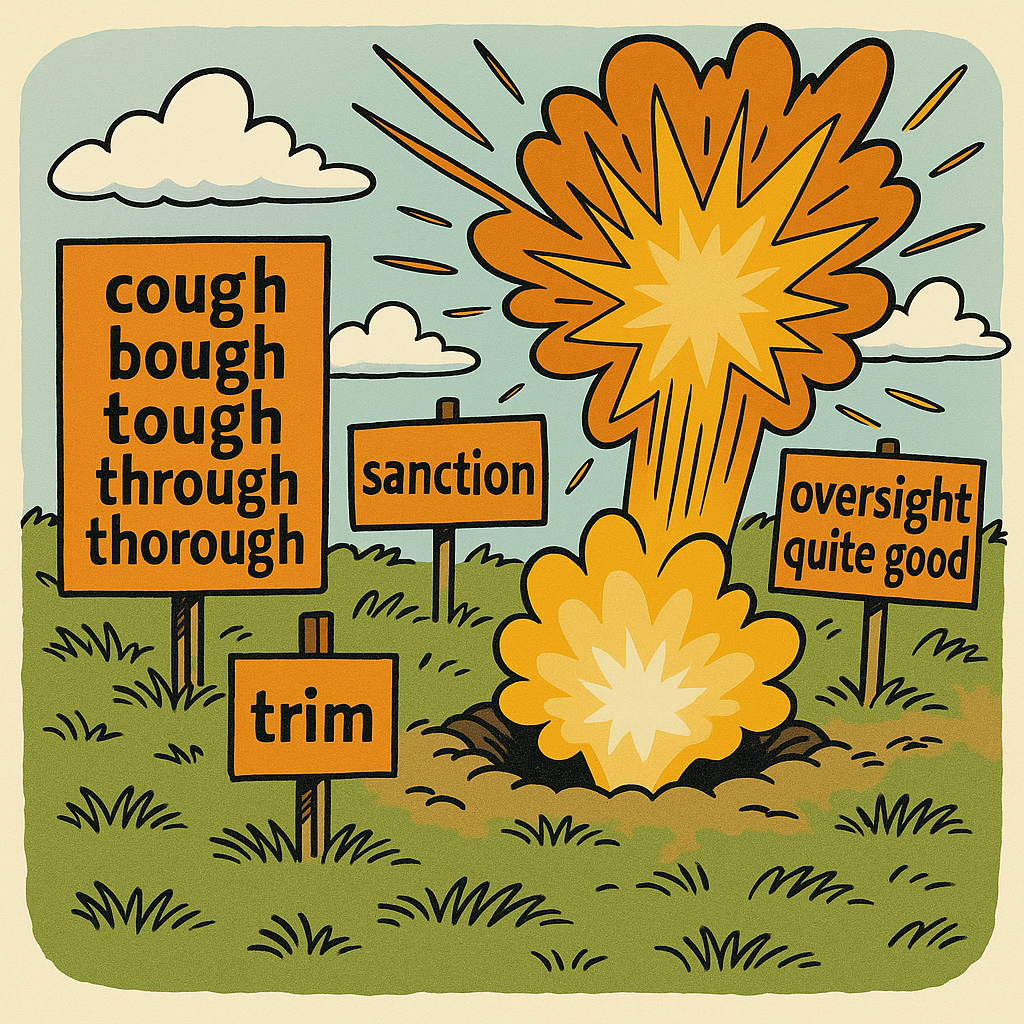
Learners of English and even translators can stumble over contranyms – words that mean the opposite of themselves. For example, you can dust a cake by adding icing sugar or dust a shelf by removing grime. You trim a hedge by cutting bits off it, but you trim a Christmas tree by adding things to it. Oversight might mean paying close attention or missing something entirely. A sanction can be approval or punishment. And quite good can mean excellent… or just meh.
Two words can create confusion
Then there are frustrating phrasal verbs, innocent-looking combinations of verbs and prepositions that behave nothing like they should. Take off, put up with, blow up, carry on, bring up, back out, give in, run out, turn up – none of them really means what the individual words suggest they might, and the same phrasal verb can have several meanings!
English spelling makes no sense
English spelling, especially British English spelling, is a special kind of terrible. It's the result of the language's mix of Old English, French, Latin and the printers who were all inventing their own spellings before spelling was standardised or who perhaps didn't even speak the language at all! Instead of evolving sensibly (like Dutch), English clung to ancient spellings long after we stopped pronouncing half the letters. That's how we ended up with the silent 'k' in words like knight and knee and the travesty that is 'ough': bough, cough, tough, though, through and thorough – words that use the same group of letters to represent completely different sounds.
Why the weirdness matters
These are just a few of the mines in the minefield that is the English language. It's a wonder anyone ever learns to speak, read or write it at all. And yet, we use it as the global language of business, doing deals, writing contracts, communicating with customers, pitching to investors, launching products, training international teams, even though it might be our second or third language.
Things really can get lost in translation, and that’s why all this weirdness matters. In translation, especially translation from Dutch into English, it's not enough to get the grammar right. Meaning, tone and nuance can shift with a single word, and English is full of words that shift.
When a translation isn't handled by a native speaker who understands – and really cares about – the minefield, the result often feels slightly off. And when a text doesn't feel right, your brand can look less polished and credible. In business writing, that's enough to chip away at trust, confuse clients or simply stop people from reading.
If you've got Dutch content that needs to sound clear, natural and definitely not weird in English, get in touch. I know my way through the minefield and can create a Dutch-to-English marketing translation that avoids the traps.