
Translating the Untranslatable
The idea of untranslatable words is both fun and fascinating. Countless online lists claim that words like flâner, saudade or Schadenfreude cannot be expressed in English. But how true is that?
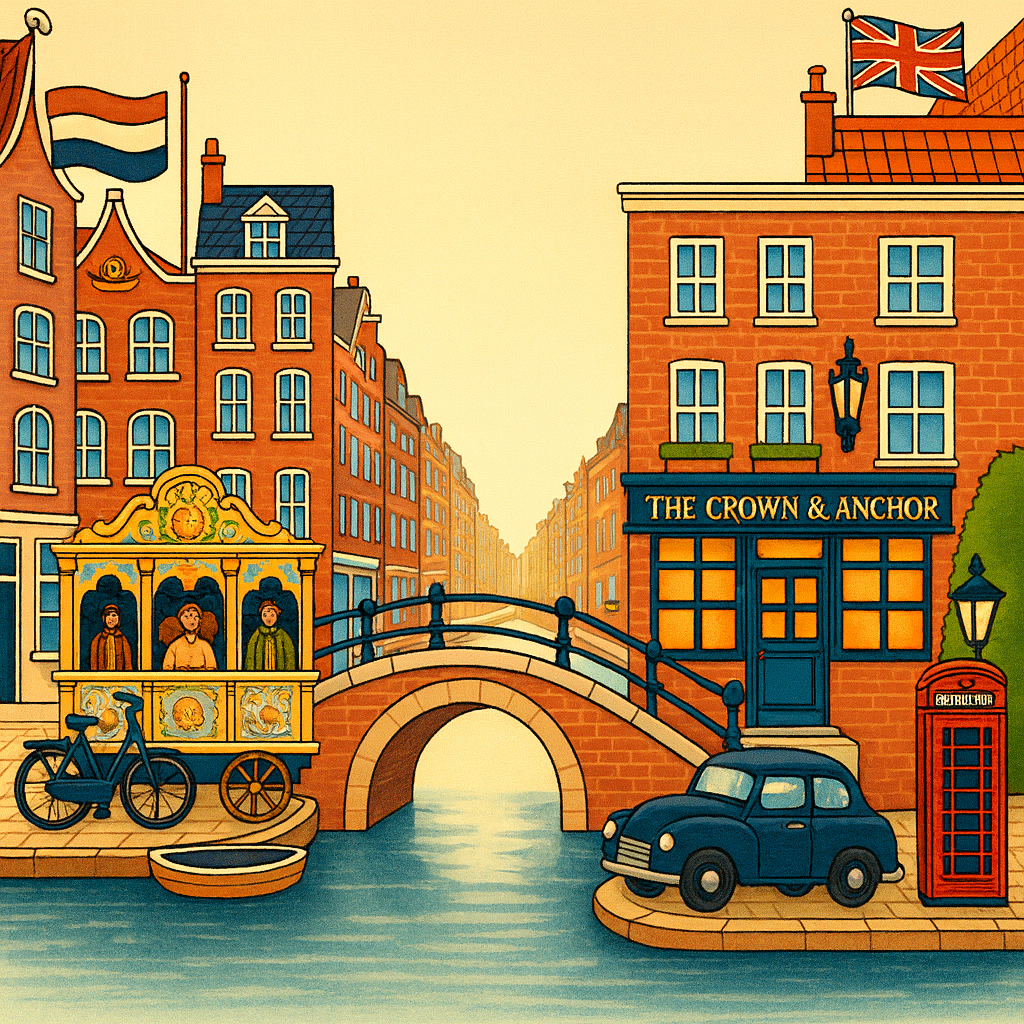
In this post, I'll debunk the myth of untranslatable words and share some of the techniques a professional Dutch-to-English translator can use to bridge the gaps between their source and target languages.
Language cousins
'Untranslatable' terms actually often have cousins in other languages. The famously untranslatable Dutch word gezelligheid aligns with the Danish hyggelig, the German Gemütlichkeit and the Swedish gemytlig.
But for a Dutch-to-English translator, fully capturing the nuances of Dutch words with no single cognate in English can be very challenging.
Some of the words that I spend a lot of time puzzling over are:
meedenken
Literal meaning: 'think along'
Full meaning: to proactively share ideas, anticipate needs and offer solutions as if you were in the client's shoes.
meekrijgen
Literal meaning: 'get with'
Full meaning: to receive something (often advice, a gift, or knowledge) when leaving or as part of a process, to catch on to or learn something, or to get someone to come along. The context dictates which of these it should be.
tegemoetkomen
Literal meaning: 'to come to meet'
Full meaning: to meet halfway or to accommodate someone's wishes or requirements, usually by making compromises.
ontzorgen
Literal meaning: 'uncare'
Full meaning: to unburden someone by taking care of all their worries, tasks, or concerns, offering complete relief and peace of mind.
sfeervol
Literal meaning: 'full of atmosphere'
Full meaning: usually describes spaces, settings or moments with a rich, warm, inviting ambience that combines mood, charm, cosiness and visual appeal.
These words are indeed impossible to translate with a single word, making them problematic for translators. The difficulty increases when space is limited, for example, when working on social media posts or subtitles.
Still, no word is truly untranslatable. Every concept can cross language borders. It may take several words instead of one, but no meaning ever vanishes in translation.
Bridging language gaps
Describing such words as 'untranslatable' misrepresents the issue, but it does highlight how languages have gaps and never fully align with one another. These gaps fall into four general categories:
Lexical: When one language has a word that doesn't exist in the other.
Example: English serendipity – 'a fortunate discovery by chance' – has no single-word Dutch equivalent.
Cultural: When a word bundles local customs, values or shared experiences into one concept.
Example: Dutch gezelligheid conveys a sense of cosy warmth and togetherness that 'cosiness' alone doesn't capture.
Structural: When a grammatical or syntactic feature in one language has no direct counterpart in another.
Example: Dutch distinguishes between the formal 'u' and the informal 'je' for 'you'; English uses only one word, so register shifts must be signalled in other ways, such as through more formal or more polite phrasing.
Pragmatic: When small words or particles carry tone, emphasis or speaker attitude.
Example: Dutch toch at the end of a sentence softens a statement or seeks confirmation. This is often rendered in English by 'right?' or 'isn't it?', but they don't quite capture the feel of the Dutch.
Bridging the gaps requires skill and a certain amount of confidence. Fortunately, particularly when translating Dutch marketing copy and fiction, it's all about creating an effect, not making literal one-for-one swaps. A professional Dutch translator will focus on meaning first and form second. The aim is to elicit the same response in the reader that the source text should, rather than to replicate the exact word order. If a single word can't carry the whole concept, we wrap it in a brief phrase or add a touch of creative flair. And if a pun or rhyme won't survive being translated, we'll aim to compensate elsewhere in the text to preserve the original feel.
So, the language gap can be bridged, and untranslatable words can be translated when you apply the right strategies.
Some strategies for translating untranslatable words
1. Circumlocution
Explain the concept.
Dutch:We helpen je graag door actief met je mee te denken.
English: We'll work together with you, proactively sharing ideas and anticipating your needs.
2. Loanword + Gloss
Keep the original term, but also define it.
Dutch:Bij ons draait alles om echte gezelligheid.
English: We're all about the cosy, friendly atmosphere so typical of Dutch gezelligheid.
3. Calque
Translate literally when it still feels natural.
Dutch:We denken met u mee om de beste oplossing te vinden.
English: We think along with you to find the best solution.
4. Borrowing
Adopt semi-international words unchanged.
Dutch:Het poldermodel vormt de kern van onze aanpak: we betrekken alle stakeholders, stemmen belangen af en werken samen aan duurzame oplossingen.
English: The poldermodel is at the heart of our approach: we involve all stakeholders, align interests and collaborate on sustainable solutions.
5. Cultural Substitution
Swap in a local equivalent that recreates the feeling without the original term.
Dutch:Je bent van harte welkom bij onze vrijmibo!
English: We'd love it if you joined us for Friday afternoon drinks!
6. Footnotes or Sidebars
For highly culture-bound terms, you can use the Dutch word but add a brief note.
Dutch:Hij proefde het draadjesvlees en zag de stukjes langzaam uit elkaar vallen, ziltig en zacht, een smaak die hem meteen terugbracht naar oma's keukentafel.
English: He tasted the draadjesvlees, watching the strands of meat fall apart, tender and savoury, a flavour that whisked him back to his grandmother's kitchen table.*
*Draadjesvlees is a slow-cooked beef stew with a rich, slightly sweet sauce, in which the meat literally falls into draadjes or 'threads'.
The idea of an untranslatable word is fun – and makes for clickable content – but it's not really correct. In the hands of a good translator, any word can be expressed in another language.
Need a Dutch-to-English translation?
If you need a creative Dutch-to-English translator who'll bridge the language gap between you and your audience, get in touch. I specialise in marketing and consumer-facing content that resonates with British audiences while staying true to your original message.